
A Checklist of 10 British Wildlife Sounds You Can Hear at Night
Step outside at midnight and the first surprise is how much noise there is. Very little of it sounds like birdsong as you know it: it is screaming, hooting, snuffling and the occasional cry like a small child in distress. Britain has a loud night shift, and most of it can be identified from a back garden, a park or a lane with a decent hedgerow. Here is a working checklist of ten sounds, when to expect them, and how to tell them apart without waving a torch around.
Owls: four voices worth separating
Owls are what most people are listening for, and what they most often misidentify. Start with the commonest.
Tawny owl
The famous "twit-twoo" is not one bird but usually two. The female gives a sharp, quivering ke-wick; the male answers with a soft, trembling hoo-hoo. They call most from October through the winter, when pairs are holding territory and sorting out boundaries, then again in late winter and spring. In late spring and summer you may hear the young instead: a rasping, hissing begging call that sounds nothing like either parent and can carry across a whole street. Look for big gardens, churchyards, parks and woodland edges.
Barn owl
No hooting at all. A barn owl gives a long, hoarse, drawn-out screech, often while flying, and it is one of the eeriest sounds in the British countryside. Around nests there is also a low snoring or chattering. Check rough grass, field margins and verges, most often in the first hour after dusk and again before dawn.
Little owl and long-eared owl
A little owl yelps — a sharp, repeated kiew kiew that sounds more like a small dog or a trodden-on cat than an owl. It calls at dusk and sometimes in daylight. A long-eared owl is quieter and much scarcer: a soft, low hoo repeated at long, even intervals, like a slow heartbeat. If you get one, log the date and time; a thin squeaky begging call from young birds sounds oddly like a rusty gate.
Foxes: the noise that wakes the street
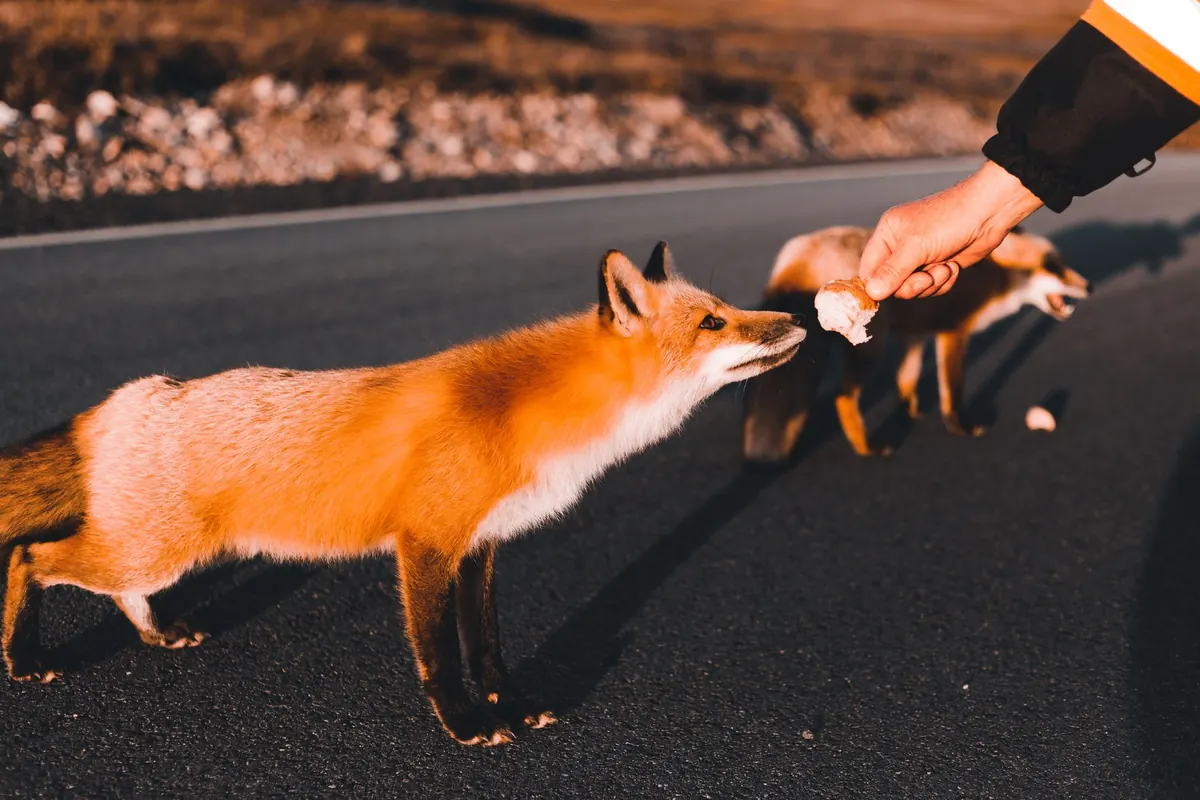
A vixen in winter makes a sound people rarely forget: three rising screams in quick succession, close enough to a human shout that neighbours call the police about it. This is the mating season, roughly December to February, though a single sharper scream can turn up in any month. Dog foxes bark rather than scream — a flat, hoarse wow, repeated every few seconds. And the dreadful wailing that gets blamed on a fox being killed is often two cats settling a dispute, or a fox and a cat doing the same.
Hedgehogs and badgers: the quiet rustlers
Hedgehogs are noisy in a domestic way. You hear snuffling like a small pig working along a border, and if you disturb one it will huff and snort in protest. In late spring and early summer, males circle females for hours, puffing and chattering, which is the busiest hedgehog sound of the year. Hoglets squeak, high and thin, in summer. Hedgehogs are usually active from April to October, and hibernate through the coldest months.
Badgers are the opposite: less vocal than people expect. Most encounters begin with rustling leaves and scratching, long before any sound from the animal itself. Listen for a soft churr or a single woof between members of a clan, and in spring, cubs whickering and chattering underground or at a sett entrance. Stand still and downwind; badgers have excellent hearing and noses.
The sounds people walk straight past
Bats are the big miss. Nearly all echolocation sits above the range of human hearing, so a bat detector is the only reliable way to identify most species. That said, pipistrelles make social ticks and chirps you can hear at dusk, especially near a roost on a warm evening in July, and the larger noctule calls low enough that some people catch dry clicks overhead. Muntjac deer produce a loud, single bark, repeated for minutes on end — a surprisingly common sound in suburban gardens and the reason some people think a dog is loose in the woods. On heathland from May to August, a nightjar churrs: a continuous mechanical purr that shifts in pitch, like a small engine idling out of sight. And in early spring, a garden pond full of common frogs will rattle and croak long into the night, with toads trilling underneath.
The checklist: ten sounds to tick off
- Tawny owl — ke-wick answered by hoo-hoo; October to March, gardens and woods.
- Barn owl — long hoarse screech in flight; all year, best just after dusk.
- Little owl — yelping kiew kiew; all year, dusk.
- Vixen — three rising screams; December to February.
- Dog fox — flat repeated bark; any month, most in winter.
- Hedgehog — snuffling, huffing, snorting; April to October.
- Badger — soft churr and rustling; spring to autumn, evening.
- Bats — audible ticks and chirps; May to September, dusk.
- Muntjac — loud repeated single bark; all year, dusk and night.
- Nightjar — continuous churring purr; May to August, heathland.
Long-eared owls would make an eleventh, if you are lucky enough to hear one.
How to listen properly
Wind and rain wipe out most of this, so choose a still, dry night. Give any new spot a full ten minutes of standing still before deciding it is empty; your own footsteps, a boiler and a distant road are all you will hear at first. Then cup your hands behind your ears and turn slowly on the spot — it funnels sound and tells you roughly which direction a call is coming from. Pick an edge rather than a wide open space: a hedgerow, pond, canal towpath, cemetery or the rough corner of a park.
A few habits turn noise into a record you can use:
- Note the date, time and temperature alongside the sound, and patterns will appear — tawny owls in October, hedgehogs in June, nightjars in July.
- Record it on your phone. Playback often reveals a second animal you did not notice at the time.
- Describe what you cannot identify: rhythm, pitch, whether it moves or stays put. That is usually enough to narrow it down later.
- Keep the torch dim and brief. All wild birds in the UK, their nests and their eggs are protected by law, and bats and their roosts are protected too. Listening is harmless; chasing, dazzling or playing calls to lure animals in is not. If you are unsure what applies where you are walking, check the current guidance from the relevant conservation body first.
The best nights are the cold, clear ones in the middle of winter and the warm, windless ones in early summer. Both are worth a coat and half an hour.
Photo: Erik Mclean / Pexels